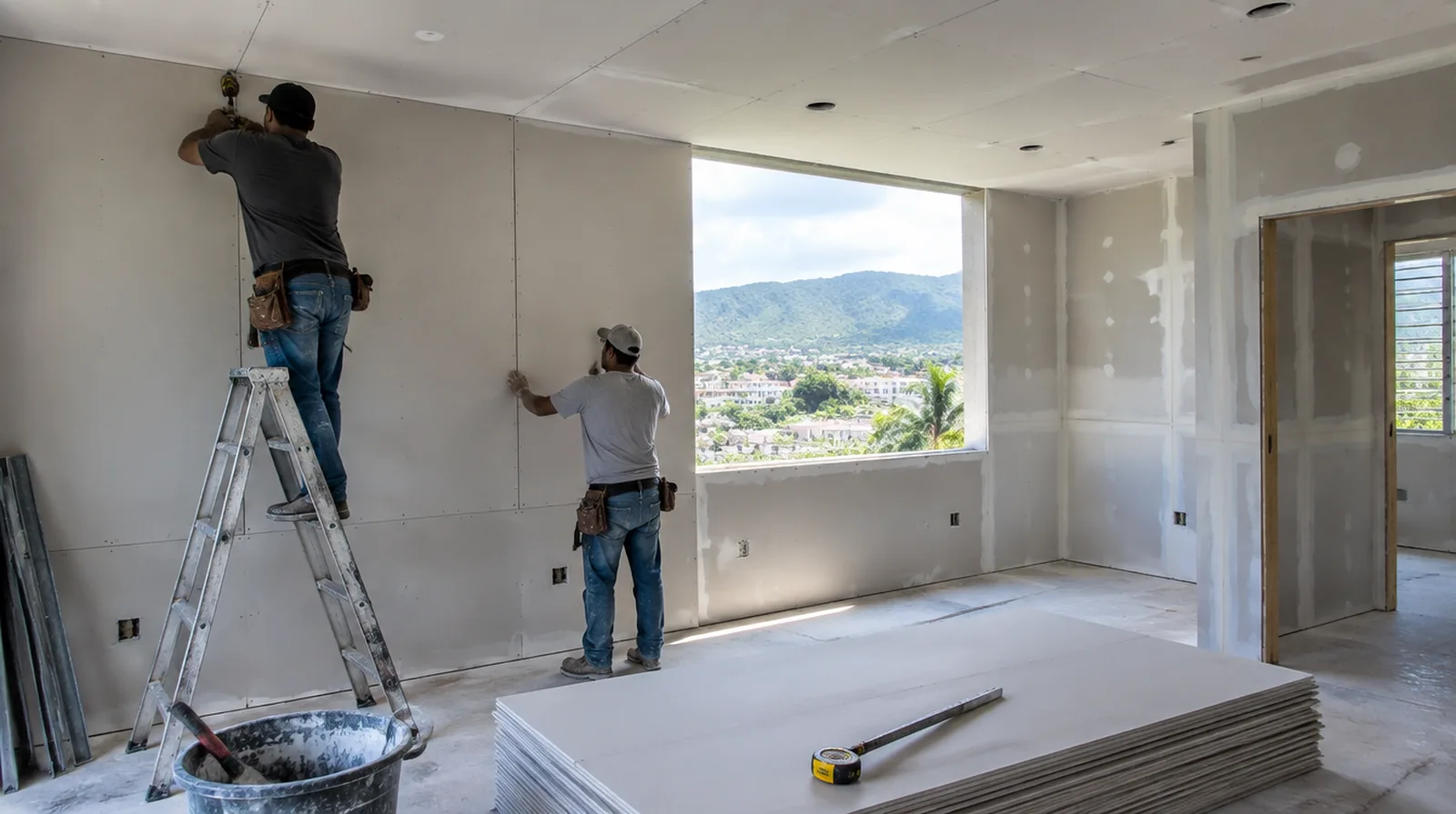
Sequence the finishing work
Joint treatment needs suitable conditions within the room and time between coats rather than a rushed pass over damp material. Coordinate room ventilation and entry while the other parts of the renovation continue. If the coating stability is unclear, assess which layers are adequately bonded and which should be removed rather than simply hidden beneath new material.
Inspect before decoration
Review dry finished walls while their edges remain visible and before fixed furnishings obstruct access. Use the agreed lighting and note any further preparation the painter should expect. For a surface that will receive wall covering, share the product requirements early so the finishing stage supports the planned decorative treatment.
Treat perimeter details
Connections to adjoining surfaces are part of the wall detail, not merely decorative gaps. The relevant fire or acoustic assembly may specify particular perimeter seals and treatments. For a surface that will receive wall covering, share the product requirements early so the finishing stage supports the planned decorative treatment.
Plan deliveries and access
Sheet dimensions need to suit the available stairs, doors and handling space as well as the finished wall. Difficult access can change labor and waste even when the interior itself is relatively small. When reviewing the finished work, use the agreed lighting and natural room viewpoints so the assessment reflects the intended use of the space.
Fit corners and openings
The finished corner line depends on precise fitting before compound is applied. The corner profile ought to be selected to match the intended appearance and the expected wear. Where a surface has been painted many times, consider whether differences in texture or sheen will require a wider decorative treatment.
Confirm concealed work
Wiring, plumbing and insulation inspections could need to happen before the cavity is closed. Photographs and a written readiness check help avoid opening a newly installed wall later. When damage followed other building work, describe the nearby alterations and the sequence between those changes and the first noticeable defect.
Control fastening depth
Fasteners should hold the board firmly without tearing through the face paper. Repair overdriven fixings or inadequate edge support instead of expecting finishing coats to conceal those defects. If there is a fixed move in date, reserve sufficient time for the coating stages after drywall work rather than counting only the installation period.
Inspect supporting framing
Drywall follows the framing underneath it, so bowed studs or uneven backing can show through the finished face. Deal with significant framing irregularities while the structure is exposed, before the boards conceal it. At a repair beside an opening, allow clearance for moving board through the doorway and space to use the finishing tools effectively.
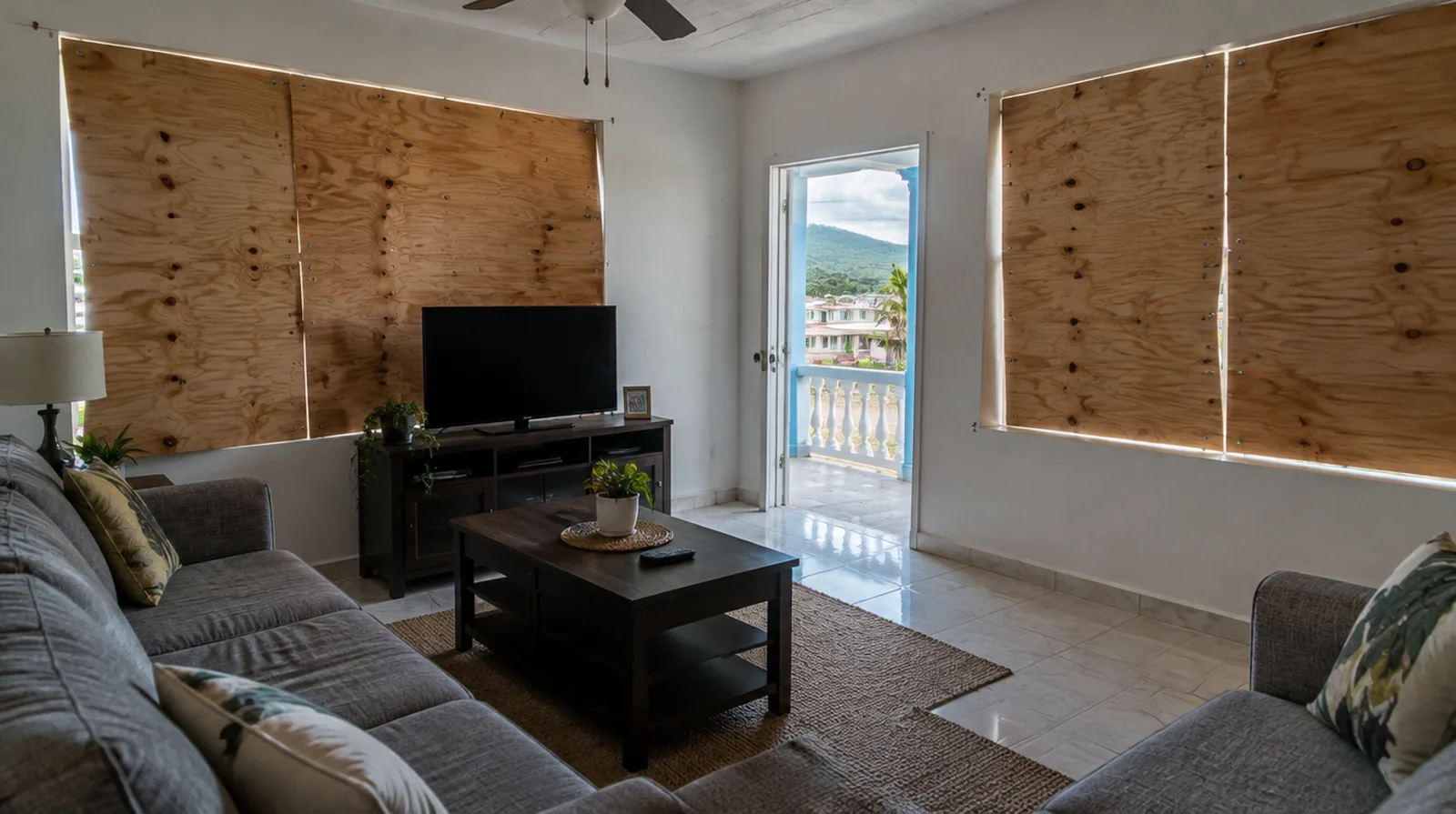
Measure the complete assembly
Calculate the board layout from all the surfaces and openings instead of the room floor area alone. A measured layout helps reduce narrow infill strips and unneeded joints around doors. When photographs are used for an initial discussion, include a wide room view as well as a close view so scale and surrounding finishes are understandable.
Select appropriate panels
Panel thickness and type depend on the intended wall or ceiling assembly and the conditions in the room. A board described as moisture resistant does not replace waterproofing where the wet area detail requires it. If the coating stability is unclear, assess which layers are adequately bonded and which should be removed rather than simply hidden beneath new material.
Project context in Caguas
Work out the panel delivery route and the clearance needed around furnishings before the room is protected. Replacement board should close a cavity only after the relevant underlying conditions have been addressed.
Scope questions before finishing
If the surface condition is uncertain, allow for an assessment that can distinguish stable material from layers that ought not to be covered.
When reviewing the finished work, use the agreed lighting and natural room viewpoints so the assessment reflects the intended use of the space.
When the decorative coating has been selected, tell the finisher its intended sheen and color while the surface preparation standard is still being agreed.
If the decorative coating is already chosen, share its sheen and color early because those choices influence how surface preparation is judged.
For work spread across distinct planes, record their dimensions separately and describe the boundary of the treatment on each surface.
While a removed panel exposes the wall cavity, complete the necessary review of concealed work before replacement board closes the opening.
For walls beside bright windows, review a dry sample from an oblique angle as well as looking straight at the repaired surface.
For a room that stays in use, set a workable boundary around construction while retaining the access people need for normal daily activities.
For a planned new wall mounted fixture, resolve its backing requirements while the cavity remains open instead of cutting into completed drywall later.
At the handover inspection, review the finish from ordinary room positions using the lighting conditions that were agreed for the work.
When the same defect has returned, share information about previous repair methods so the next assessment can consider why they did not last.
When a quote includes multiple visits, ask what happens during each stage and when the room needs to remain undisturbed between coats.
Explore the Caguas drywall overview for related options, or read the project planning information before arranging the next stage.
More planning details for Caguas
For Caguas refurbishment work, a wall beside a cooled interior space is worth assessing with its moisture history in mind. Describe any recurring discoloration or changes around joints instead of treating the visible mark as the entire problem. Warm humid weather can affect both material storage and the interval between finishing coats, so leave those practical questions in the schedule.